Deep Dive: Solana DePIN - March 2026
Deep Dive: Solana DePIN - March 2026
Note: Below is the text-accessible version of this post for visually impaired readers.
Syndica Deep Dive: Solana DePIN - March 2026
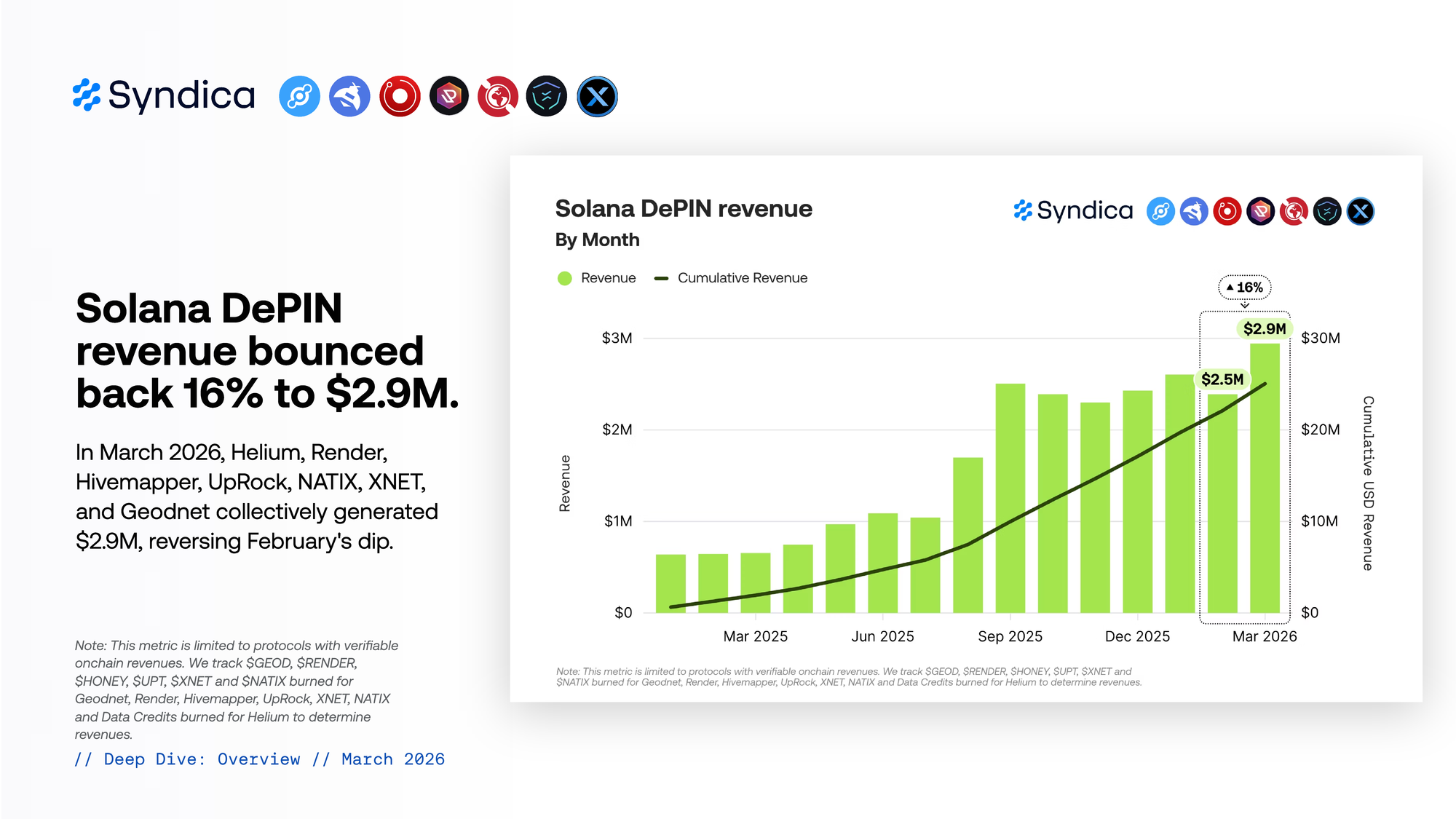
Solana DePIN revenue bounced back 16% to $2.9M.
In March 2026, Helium, Render, Hivemapper, UpRock, NATIX, XNET, and Geodnet collectively generated $2.9M, reversing February's dip.
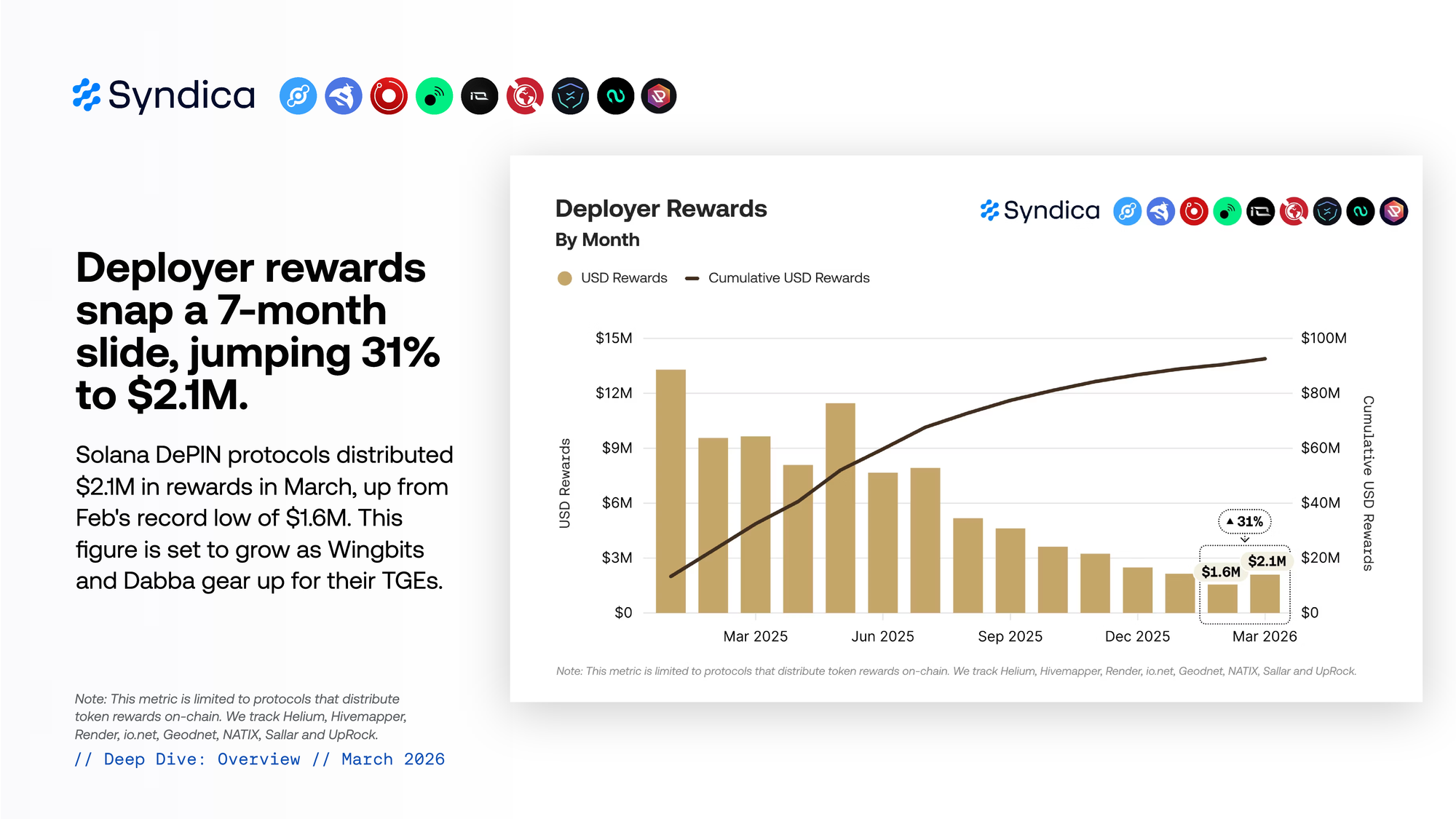
Deployer rewards snap a 7-month slide, jumping 31% to $2.1M.
Solana DePIN protocols distributed $2.1M in rewards in March, up from Feb's record low of $1.6M. This figure is set to grow as Wingbits and Dabba gear up for their TGEs.
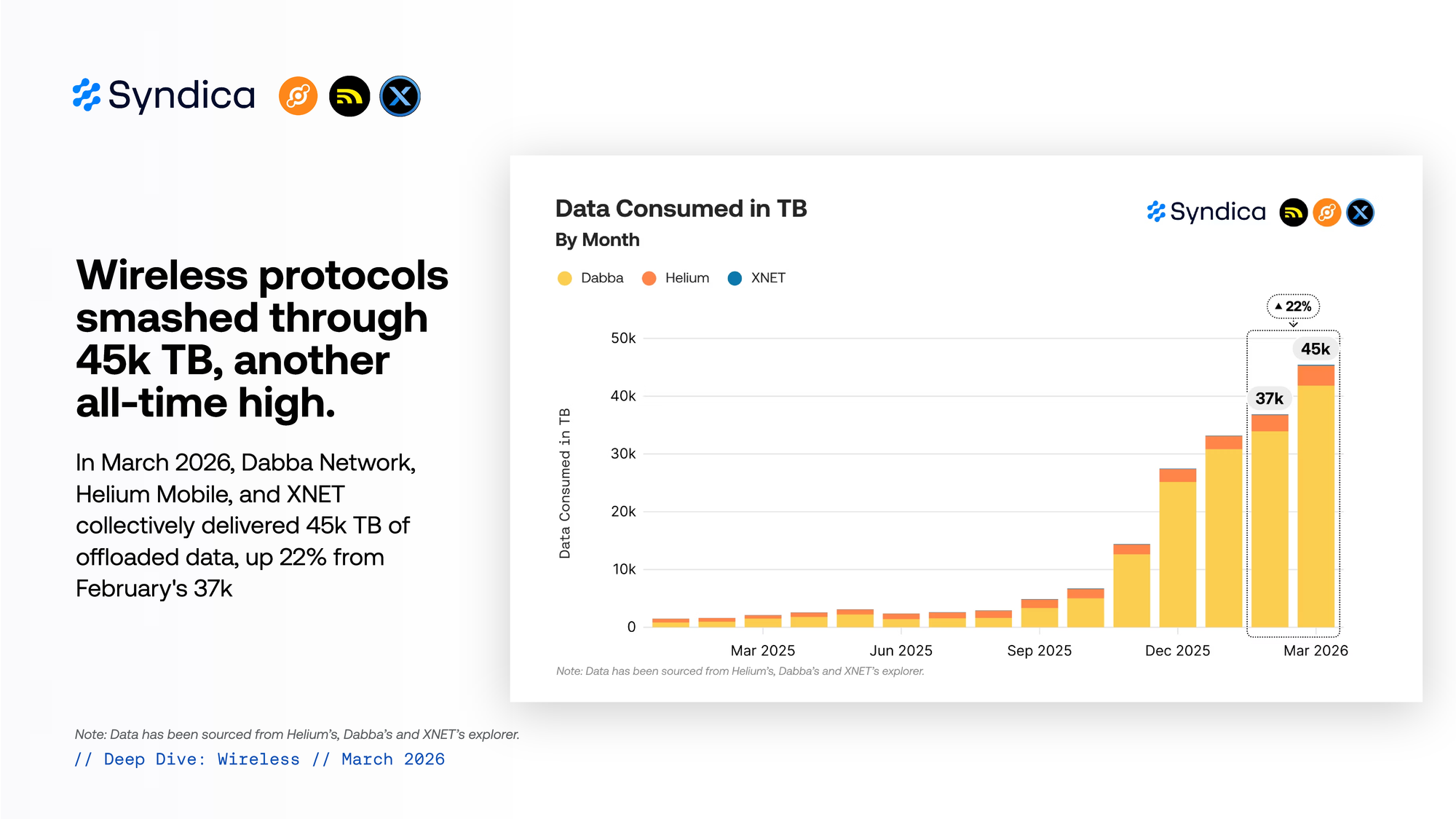
Wireless protocols smashed through 45k TB, another all-time high.
In March 2026, Dabba Network, Helium Mobile, and XNET collectively delivered 45k TB of offloaded data, up 22% from February's 37k TB.
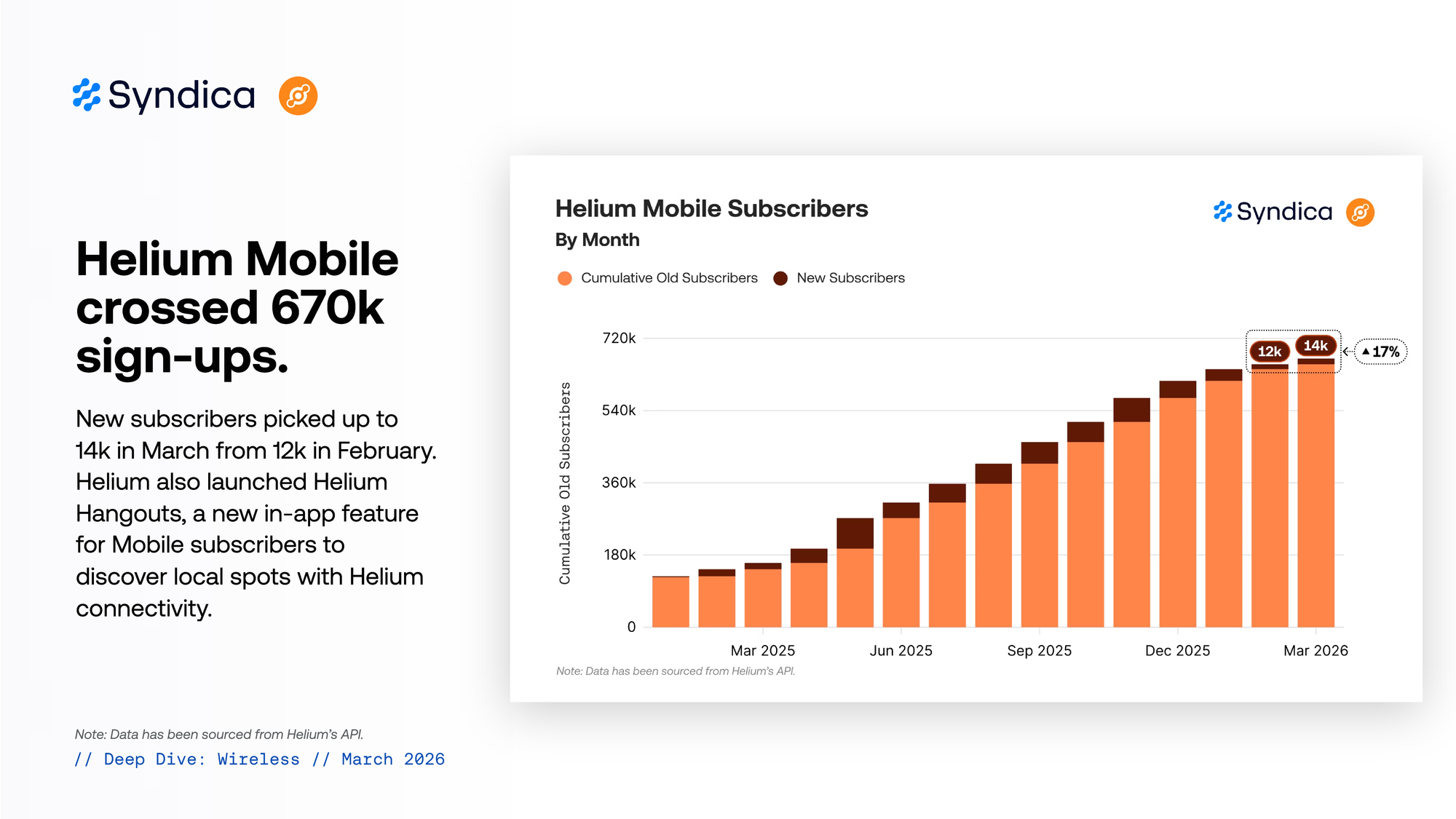
Helium Mobile crossed 670k sign-ups.
New subscribers picked up to 14k in March from 12k in February. Helium also launched Helium Hangouts, a new in-app feature for Mobile subscribers to discover local spots with Helium connectivity.
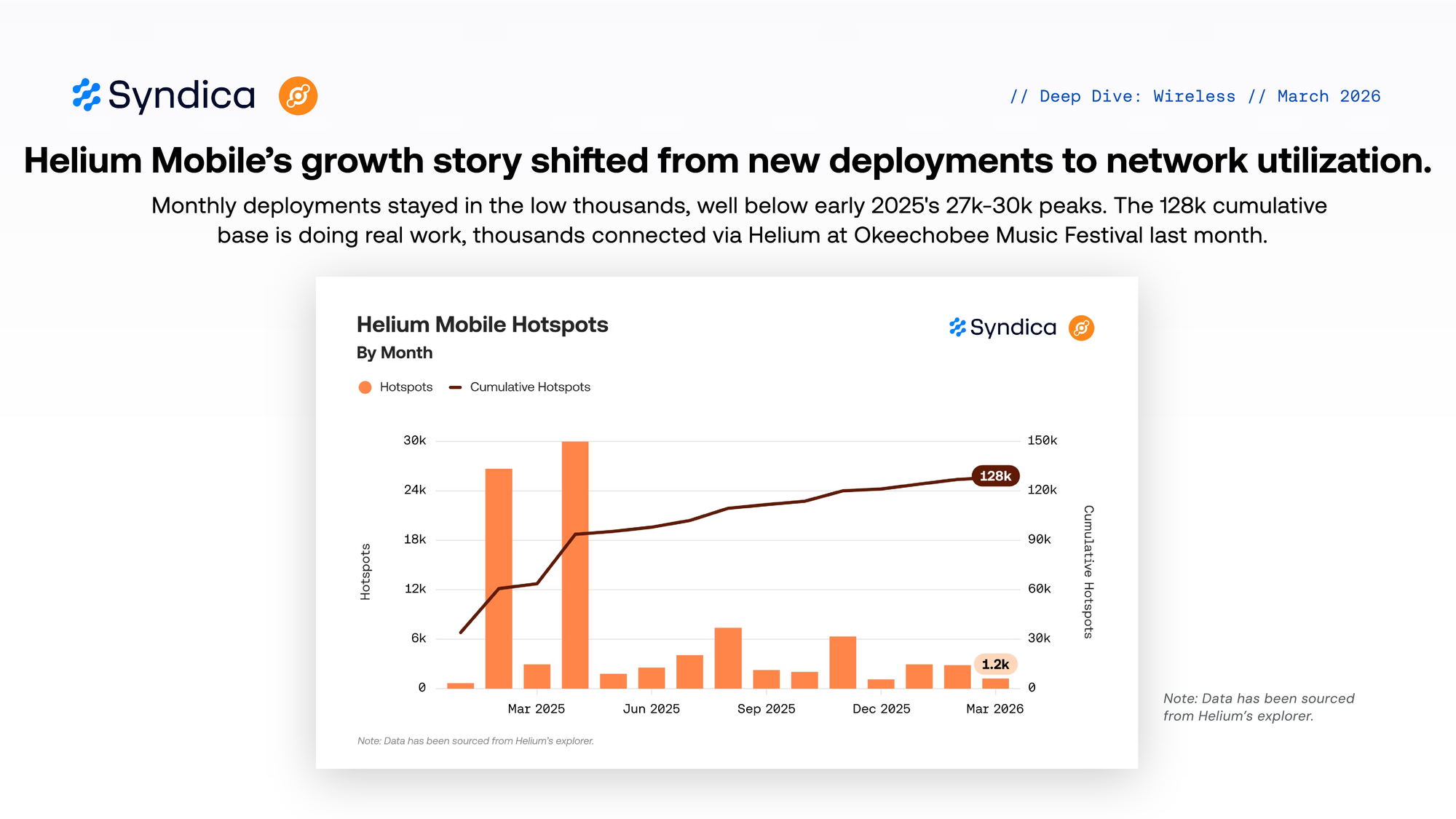
Helium's growth story shied from new deployments to network utilization.
Monthly deployments stayed in the low thousands, well below early 2025's 27k-30k peaks. The 128k cumulative base is doing real work, thousands connected via Helium at Okeechobee Music Festival last month.
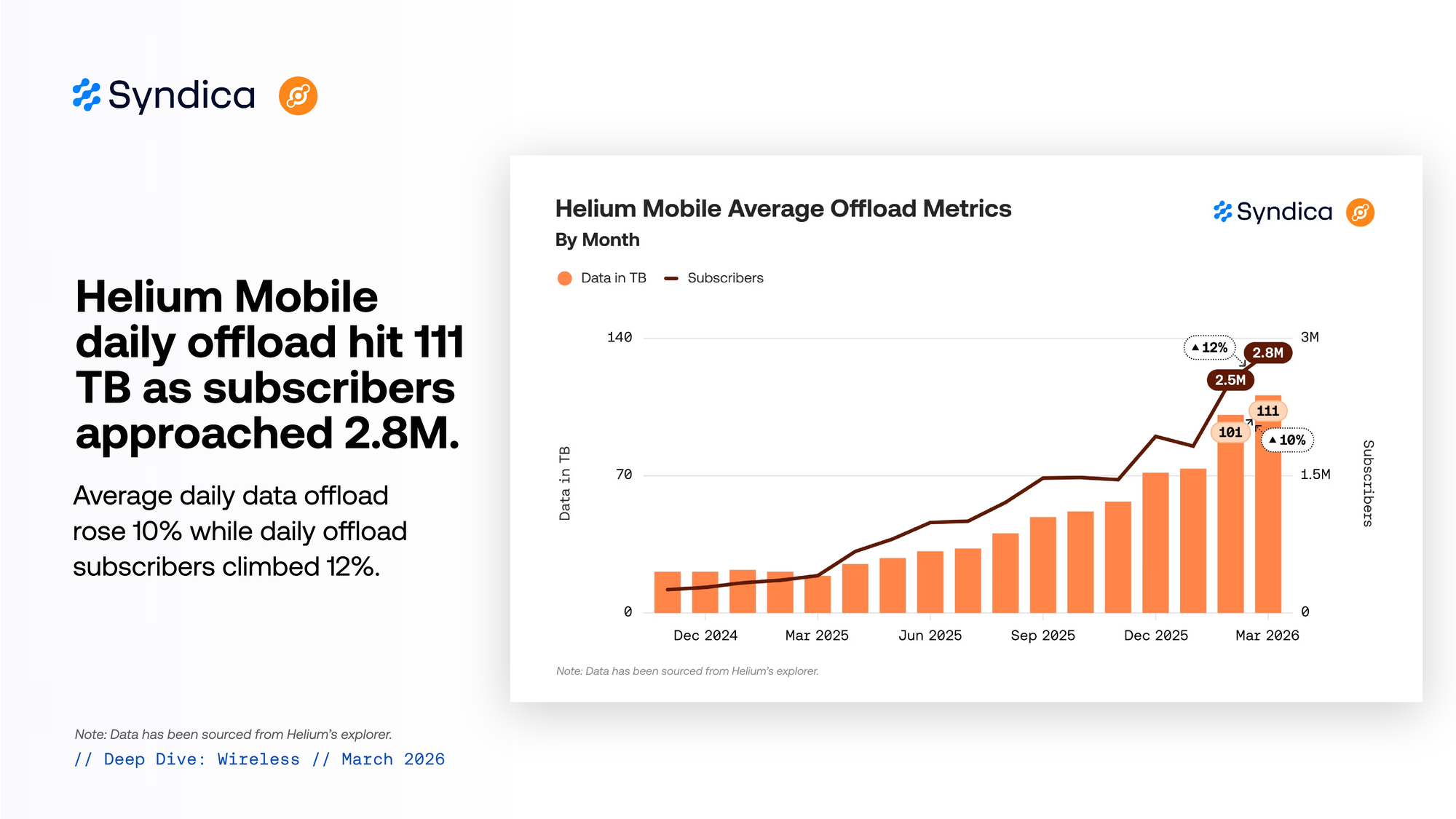
Helium daily offload hit 111 TB as subscribers approached 2.8M.
Average daily data offload rose 10% while daily offload subscribers climbed 12%.
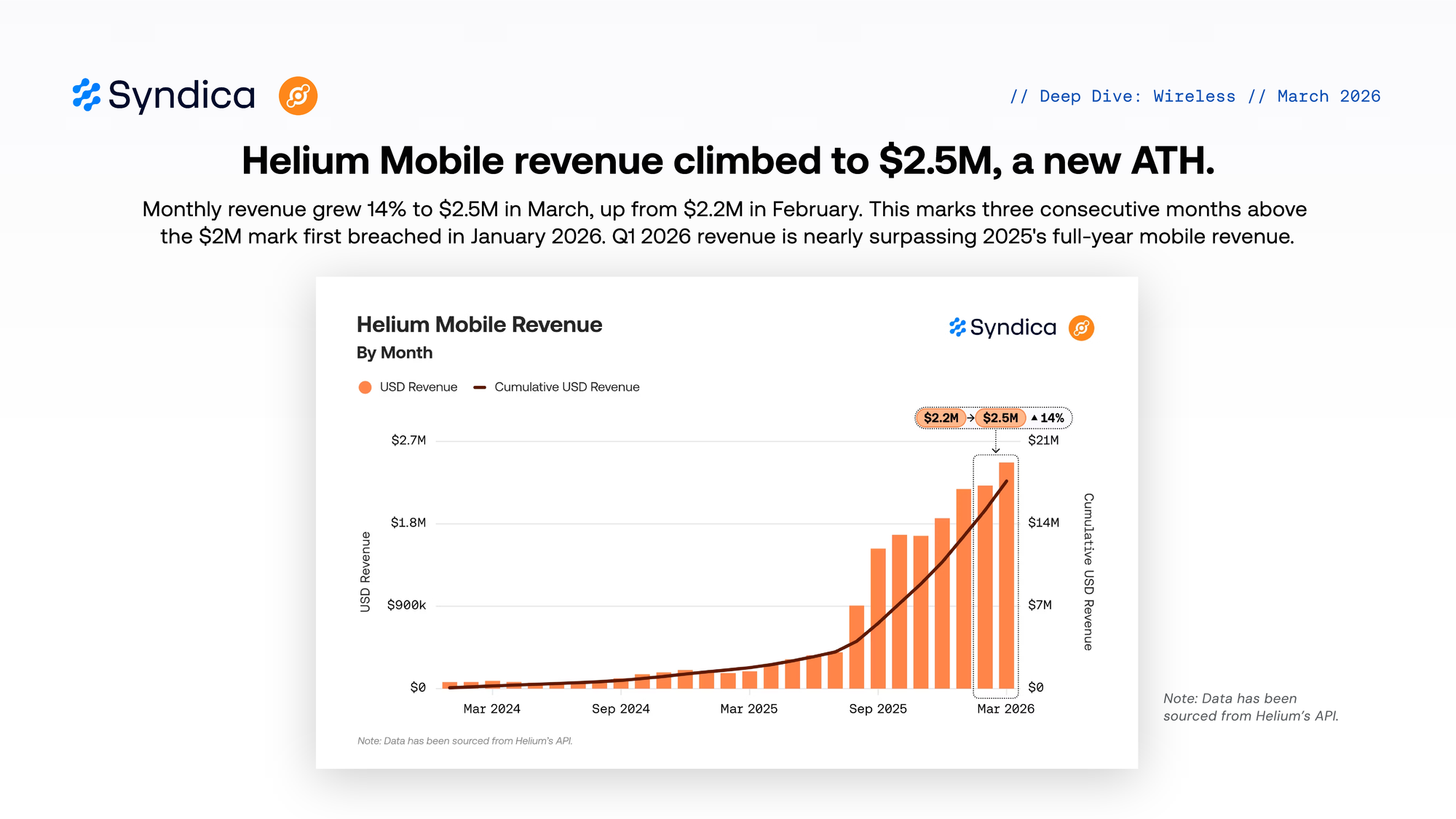
Helium revenue climbed to $2.5M, a new ATH.
Monthly revenue grew 14% to $2.5M in March, up from $2.2M in February. This marks three consecutive months above the $2M mark first breached in January 2026. Q1 2026 revenue is nearly surpassing 2025's full-year mobile revenue.
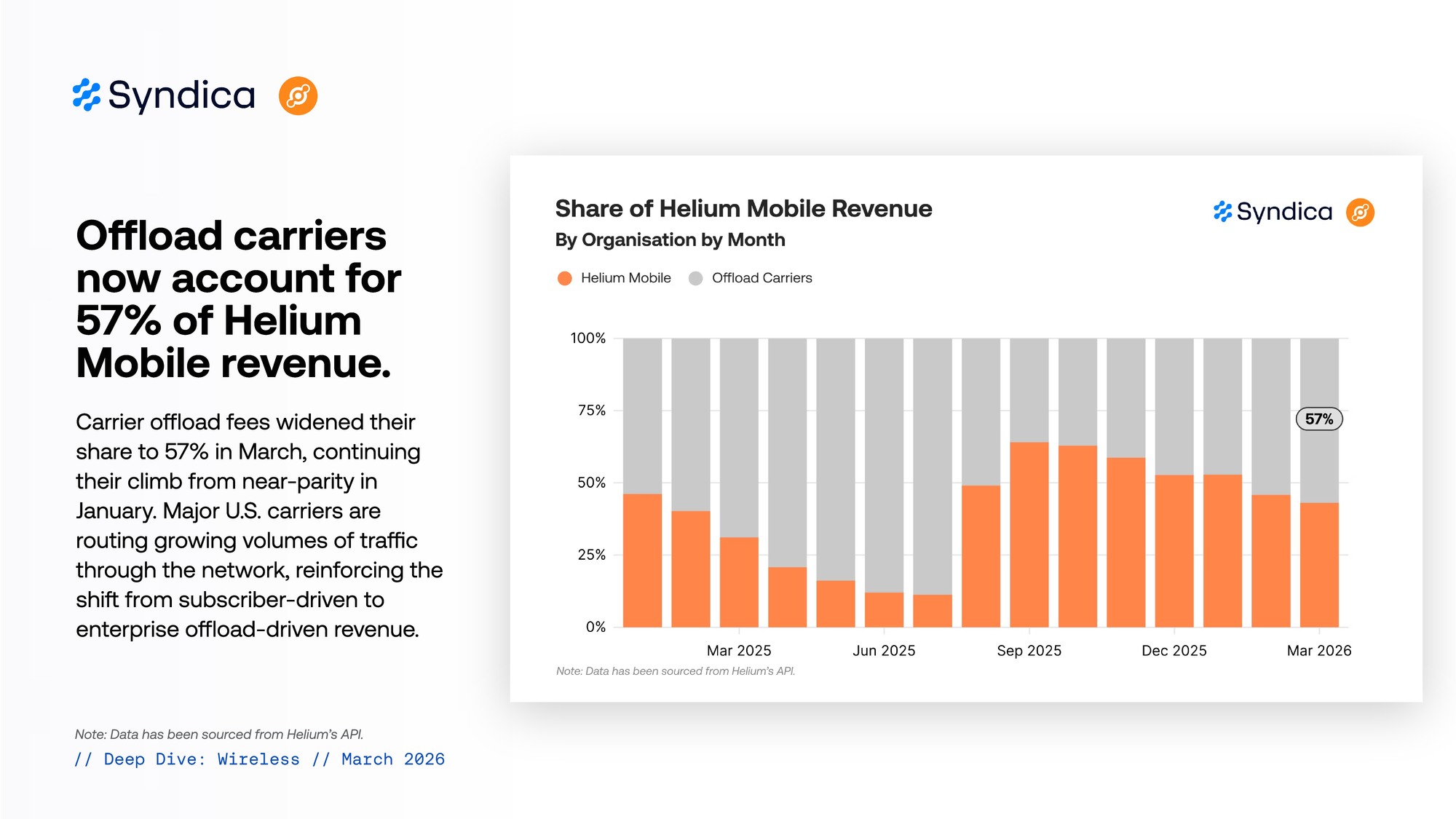
Offload carriers now account for 57% of Helium Mobile revenue.
Carrier offload fees widened their share to 57% in March, continuing their climb from near-parity in January. Major U.S. carriers are routing growing volumes of traffic through the network, reinforcing the shift from subscriber-driven to enterprise offload-driven revenue.
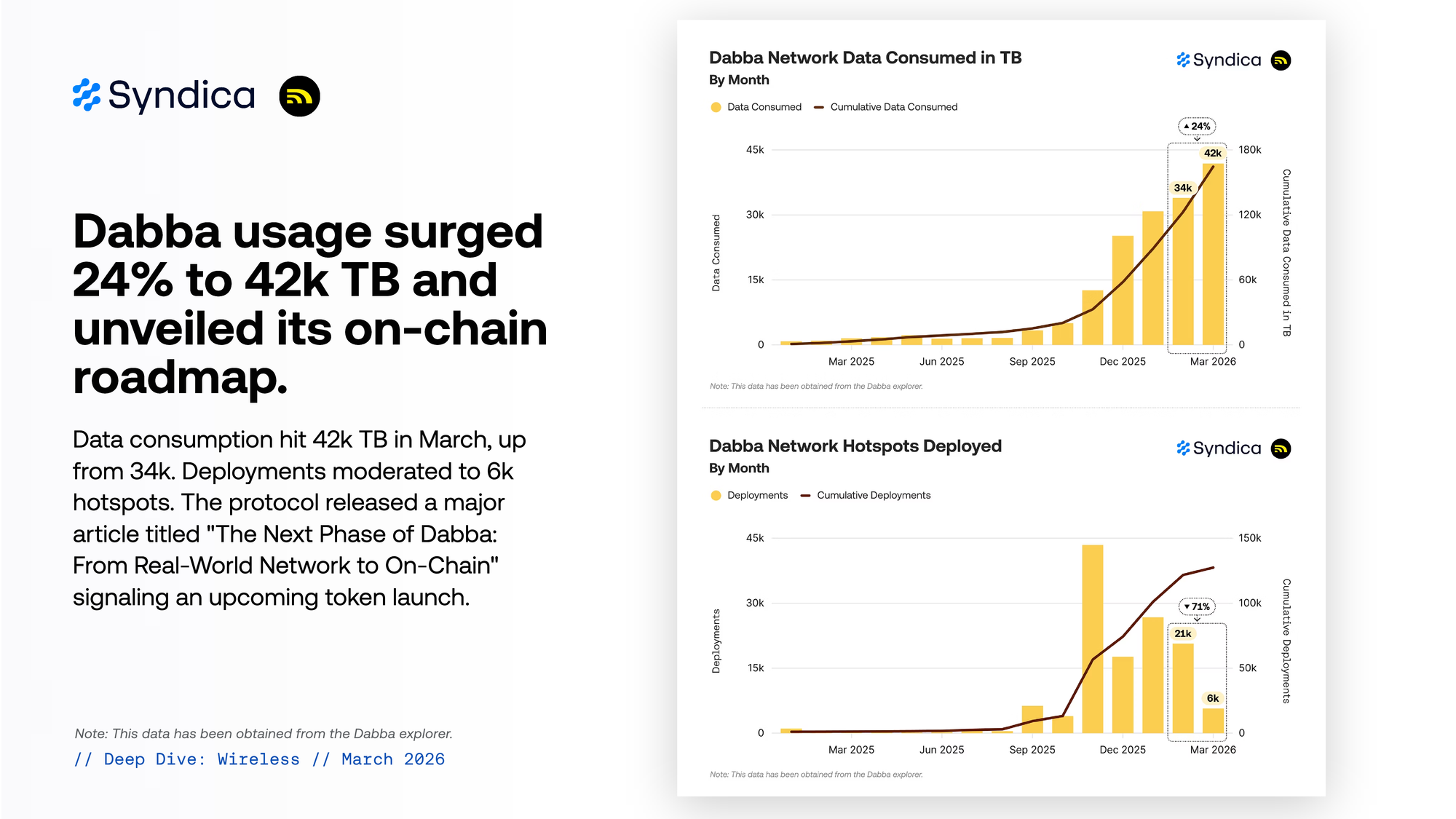
Dabba usage surged 24% to 42k TB and unveiled its on-chain roadmap.
Data consumption hit 42k TB in March, up from 34k. Deployments moderated to 6k hotspots. The protocol released a major article titled "The Next Phase of Dabba: From Real-World Network to On-Chain" signaling an upcoming token launch.
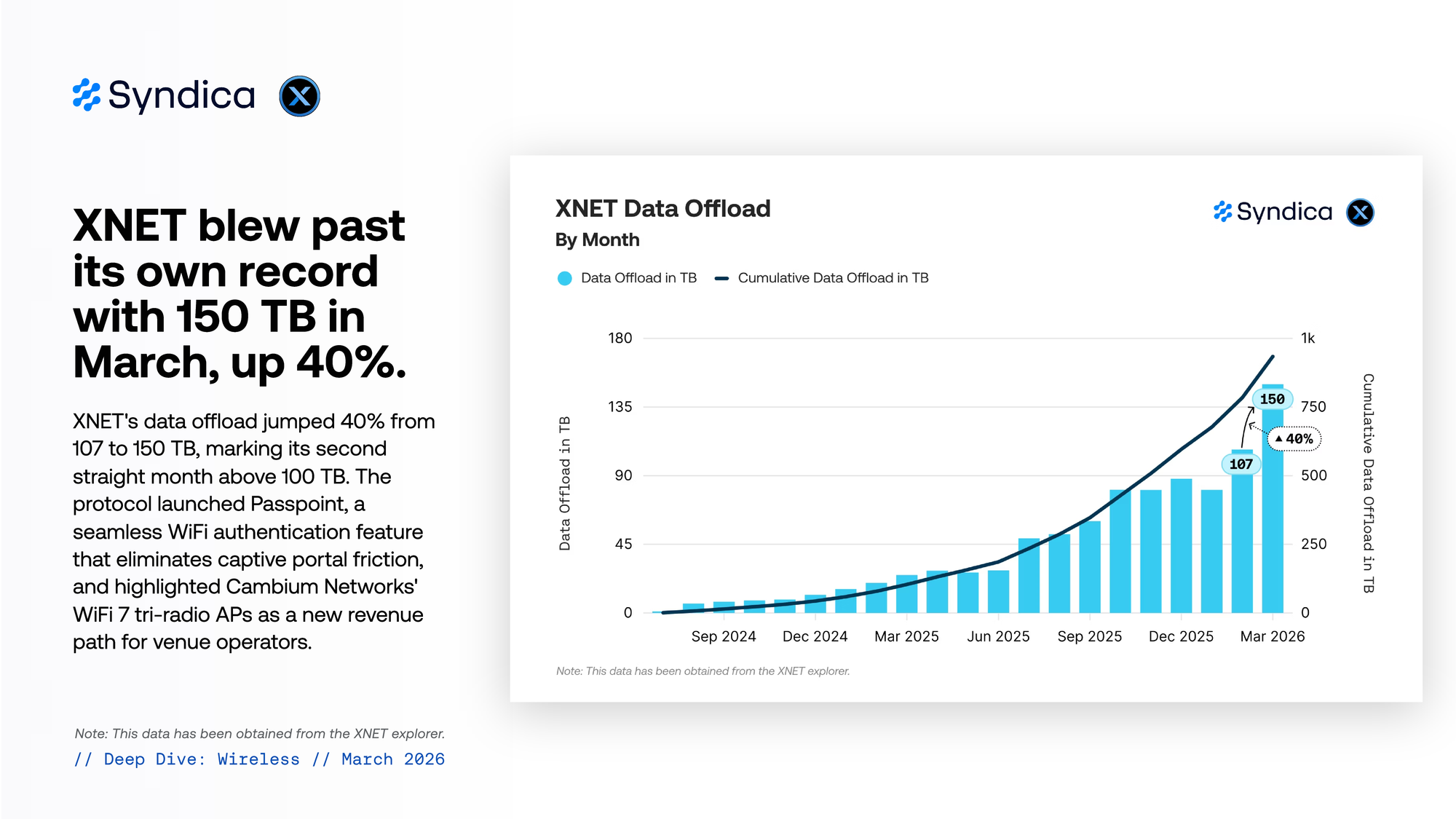
XNET blew past its own record with 150 TB in March, up 40%.
XNET's data offload jumped 40% from 107 to 150 TB, marking its second straight month above 100 TB. The protocol launched Passpoint, a seamless WiFi authentication feature that eliminates captive portal friction, and highlighted Cambium Networks' WiFi 7 tri-radio APs as a new revenue path for venue operators.
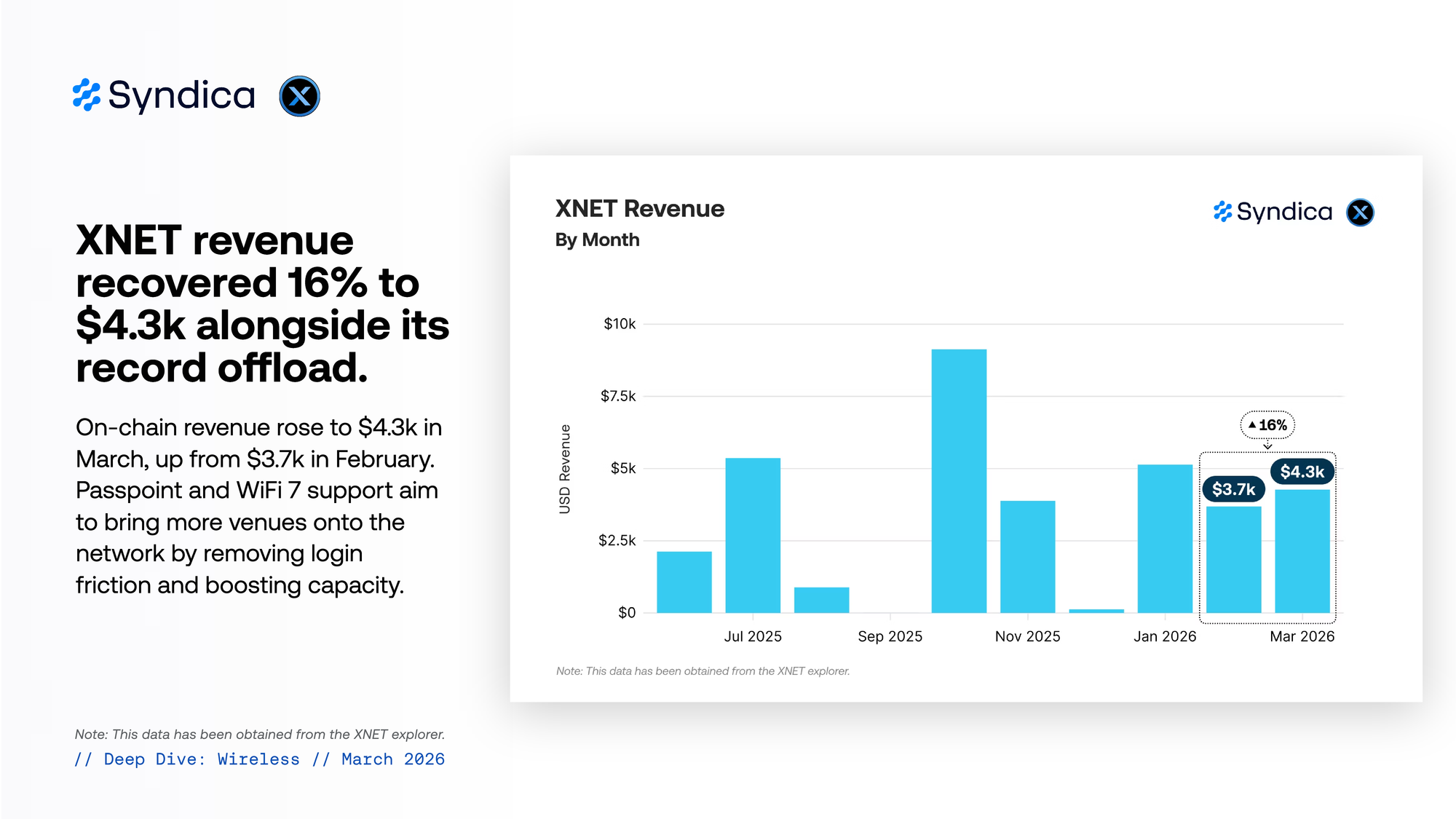
XNET revenue recovered 16% to $4.3k alongside its record offload.
On-chain revenue rose to $4.3k in March, up from $3.7k in February. Passpoint and WiFi 7 support aim to bring more venues onto the network by removing login friction and boosting capacity.
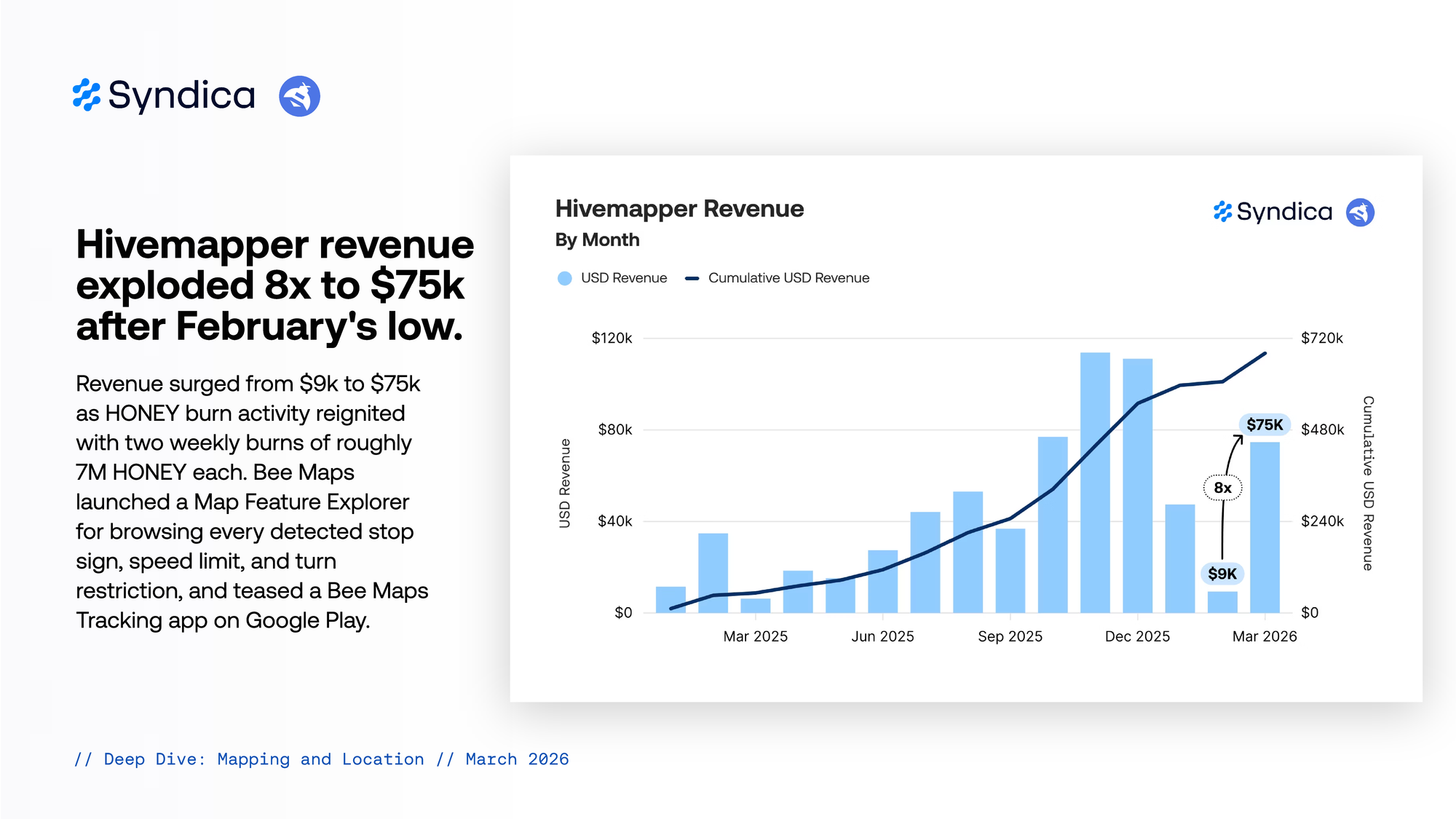
Hivemapper revenue exploded 8x to $75k after February's low.
Revenue surged from $9k to $75k as HONEY burn activity reignited with two weekly burns of roughly 7M HONEY each. Bee Maps launched a Map Feature Explorer for browsing every detected stop sign, speed limit, and turn restriction, and teased a Bee Maps Tracking app on Google Play.
Hivemapper contributors jumped 51% to 242 as new products drew mappers back.
New contributors rose from 160 to 242 in March, coinciding with the Map Feature Explorer launch and the Bee Maps Tracking app tease.
Hivemapper mapping jumped 38% to 11M km as events surged 67%.
Kilometers mapped rose from 8M to 11M and map data events climbed from 3M to 5M. The recovery across every metric suggests that the Map Feature Explorer and Bee Maps Tracking app tease fueled renewed contributor interest.
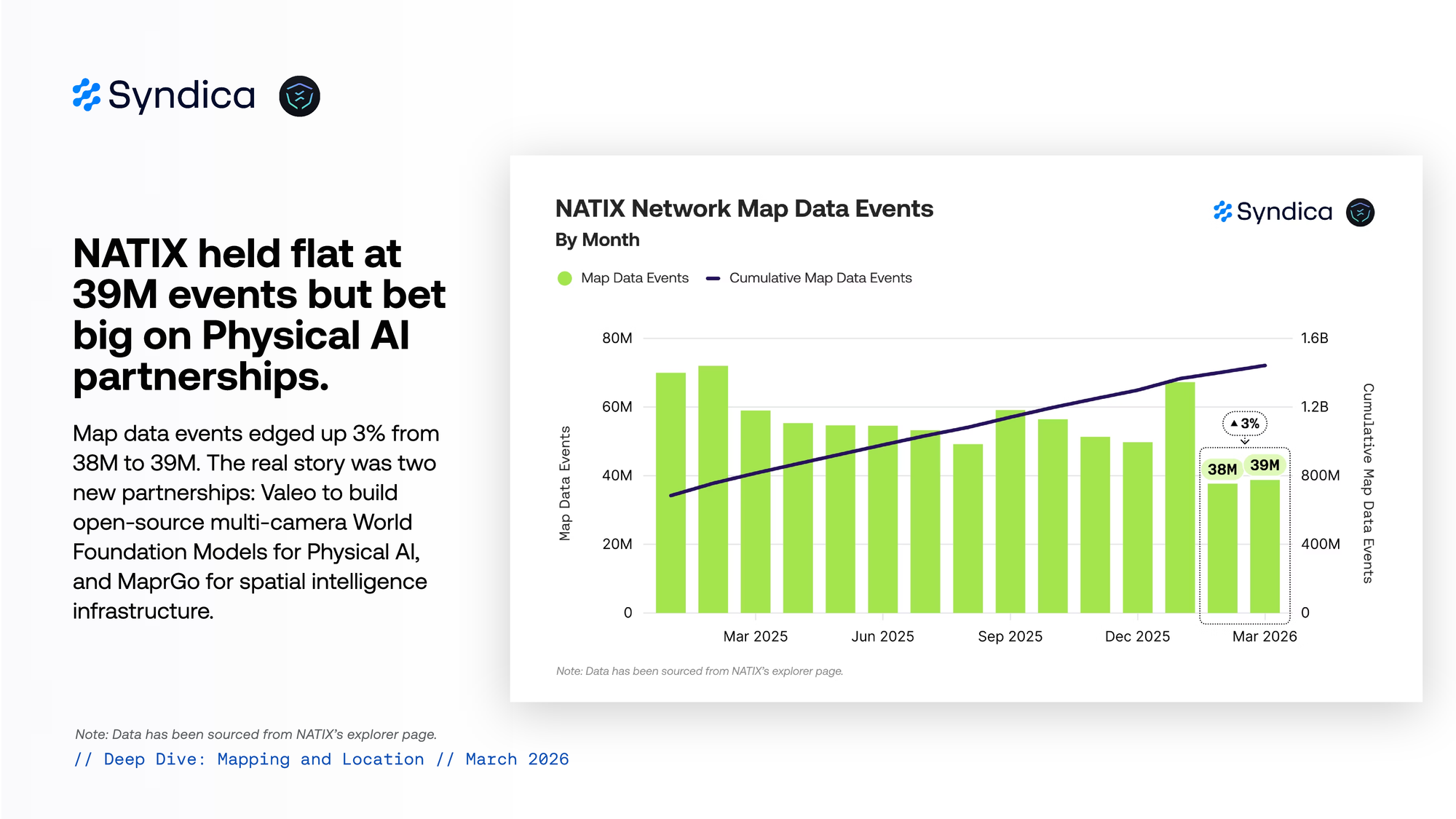
NATIX held flat at 39M events but bet big on Physical AI partnerships.
Map data events edged up 3% from 38M to 39M. The real story was two new partnerships: Valeo to build open-source multi-camera World Foundation Models for Physical AI, and MaprGo for spatial intelligence infrastructure.
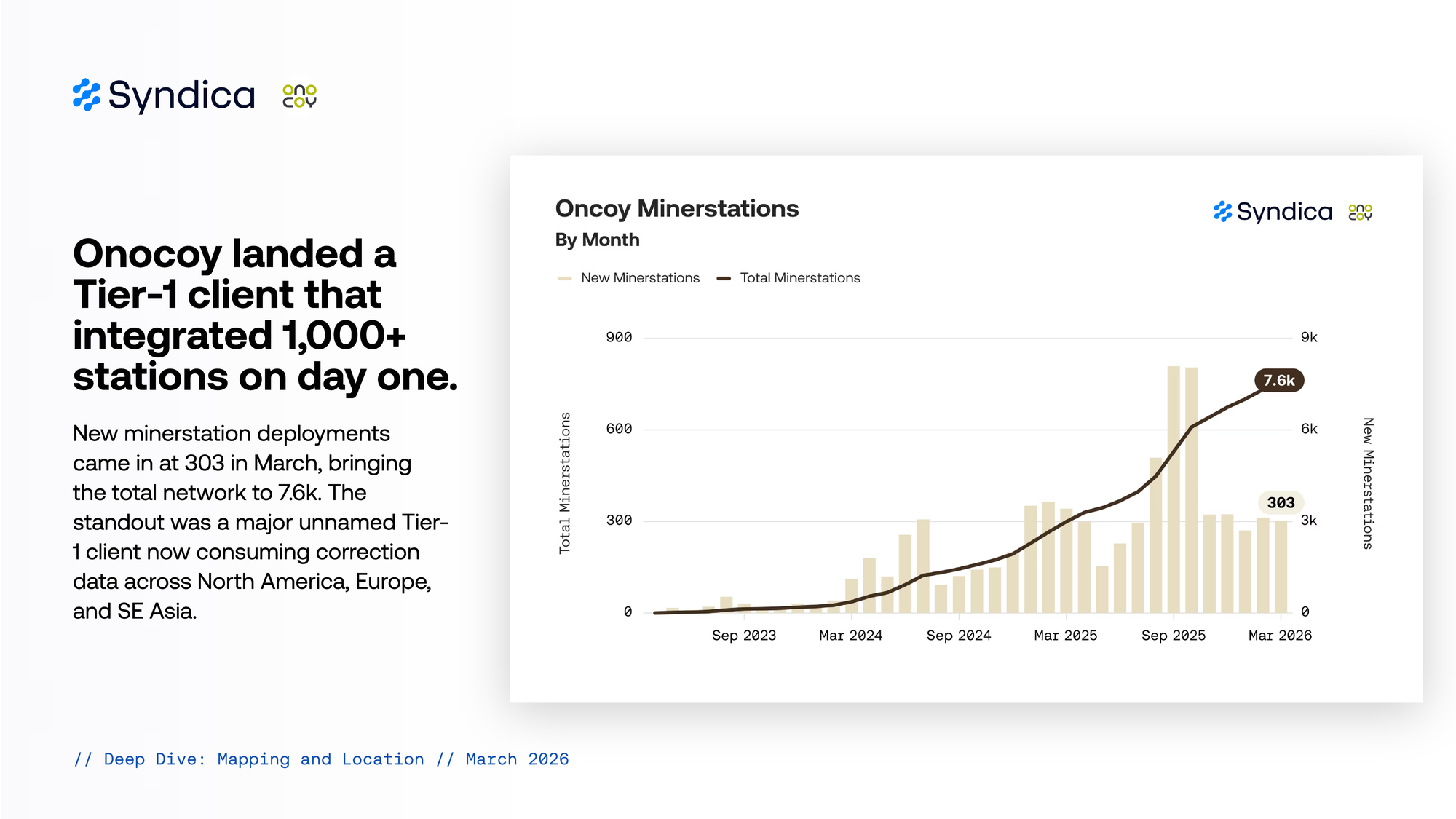
Onocoy landed a Tier-1 client that onboarded 1,000+ stations on day one.
New minerstation deployments came in at 303 in March, bringing the total network to 7.6k. The standout was a major unnamed Tier-1 client now consuming correction data across North America, Europe, and SE Asia.
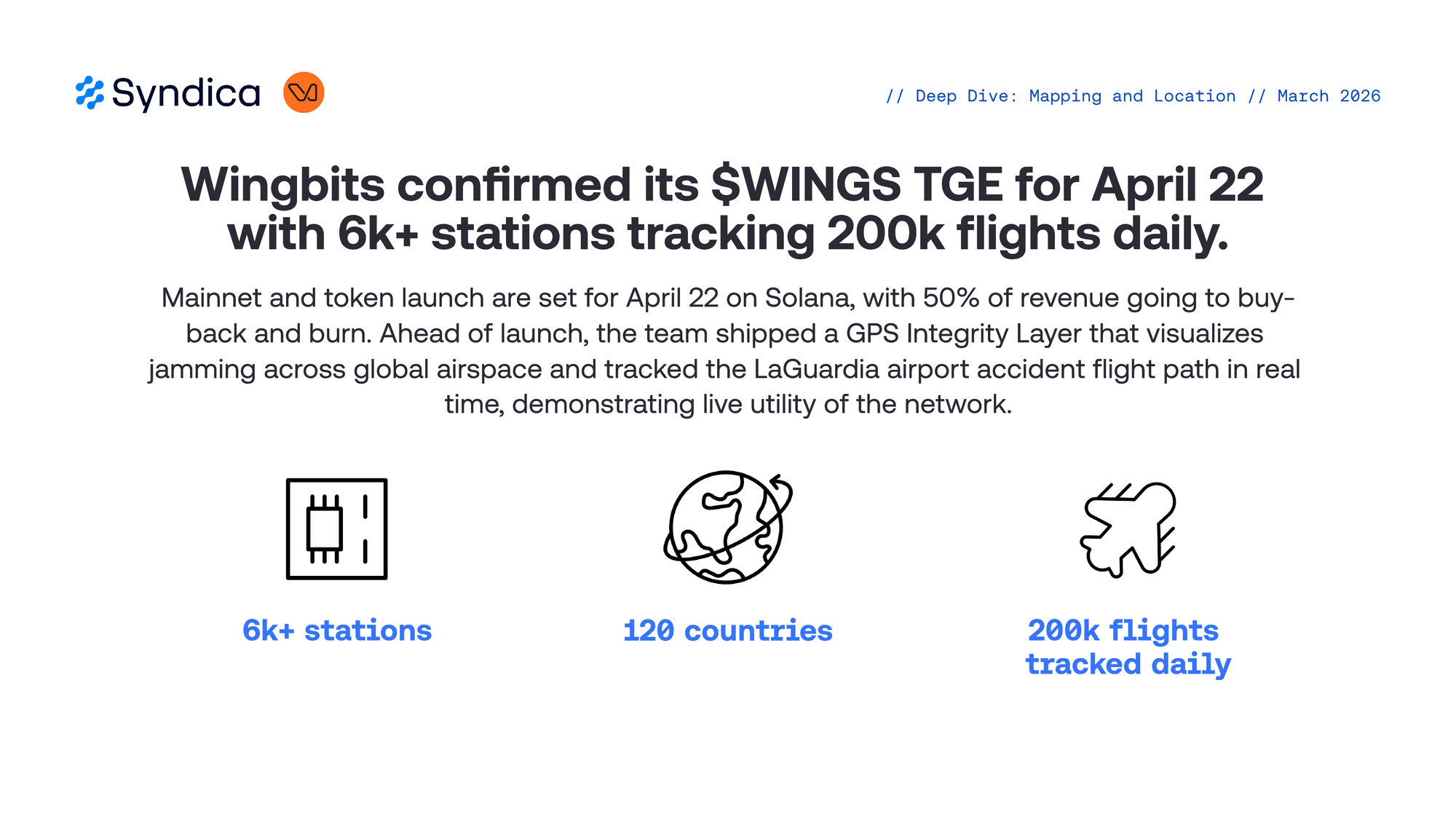
Wingbits confirmed its $WINGS TGE for April 22 with 6k+ stations tracking 200k flights daily.
Mainnet and token launch are set for April 22 on Solana, with 50% of revenue going to buy-back and burn. Ahead of launch, the team shipped a GPS Integrity Layer that visualizes jamming across global airspace and tracked the LaGuardia airport accident flight path in real time, demonstrating live utility of the network.
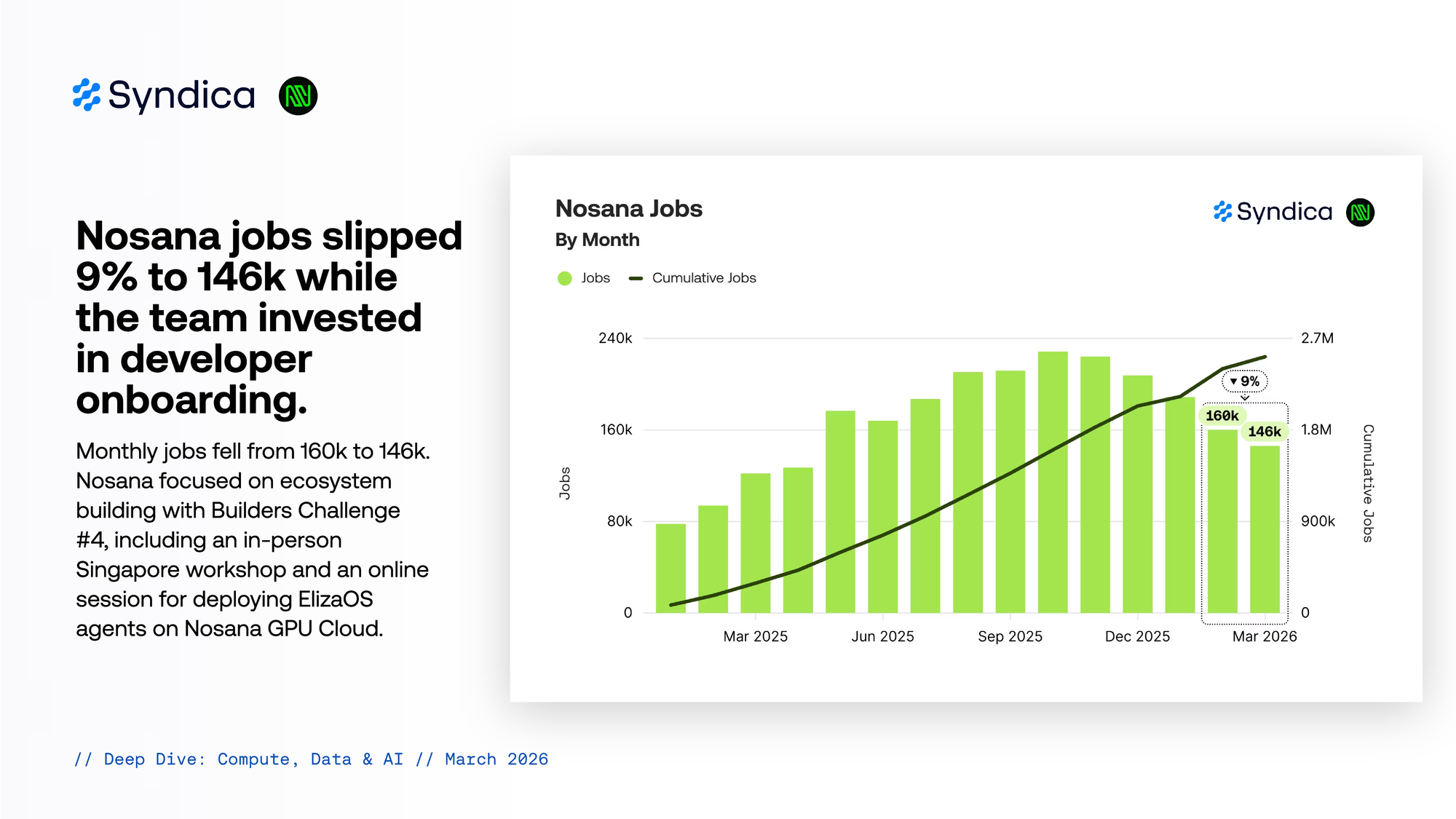
Nosana jobs slipped 9% to 146k while the team invested in developer onboarding.
Monthly jobs fell from 160k to 146k. Nosana focused on ecosystem building with Builders Challenge #4, including an in-person Singapore workshop and an online session for deploying ElizaOS agents on Nosana GPU Cloud.
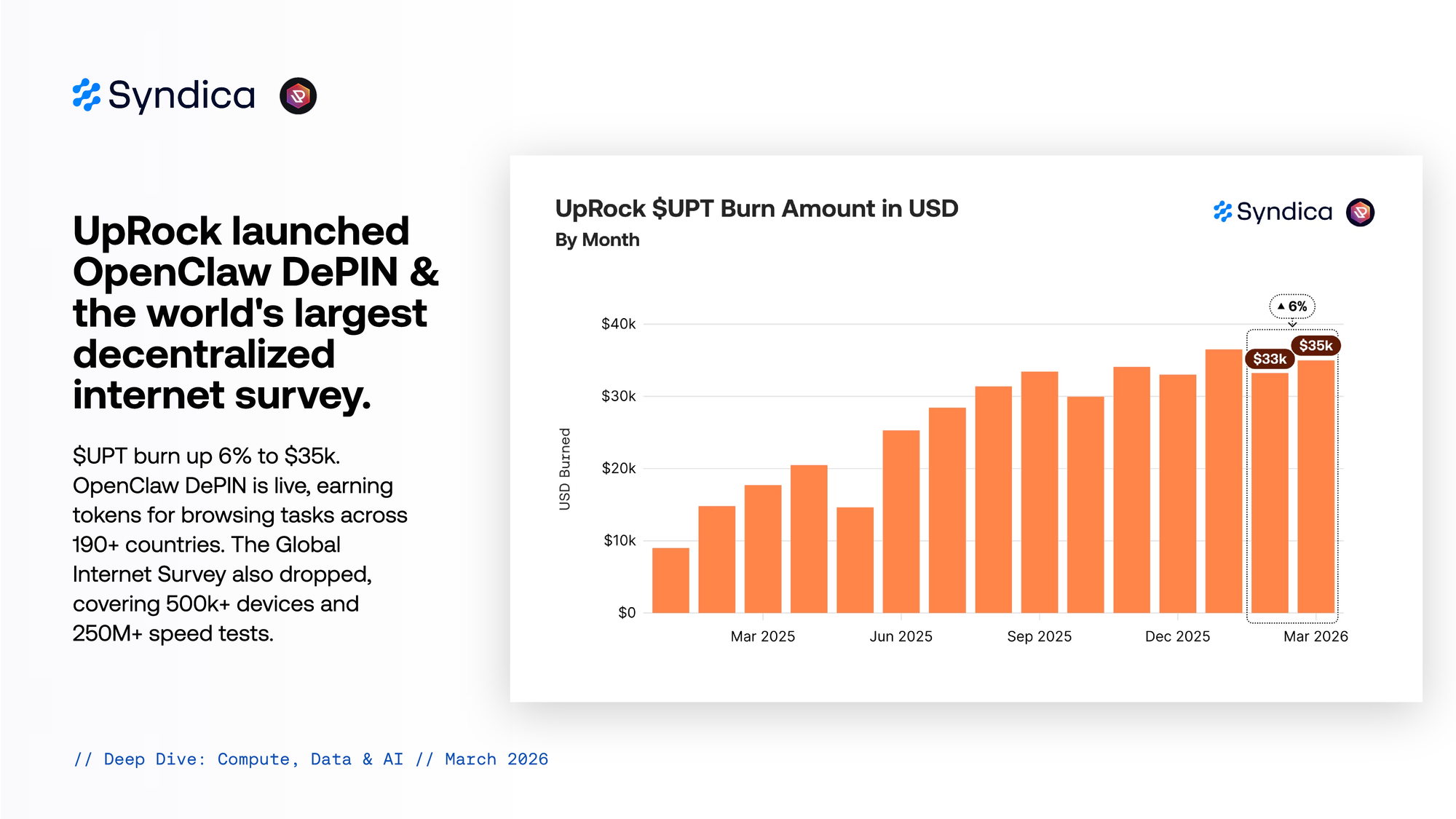
UpRock launched OpenClaw DePIN and the world's largest decentralized internet survey.
$UPT burn up 6% to $35k. OpenClaw DePIN is live, earning tokens for browsing tasks across 190+ countries. The Global Internet Survey also dropped, covering 500k+ devices and 250M+ speed tests.
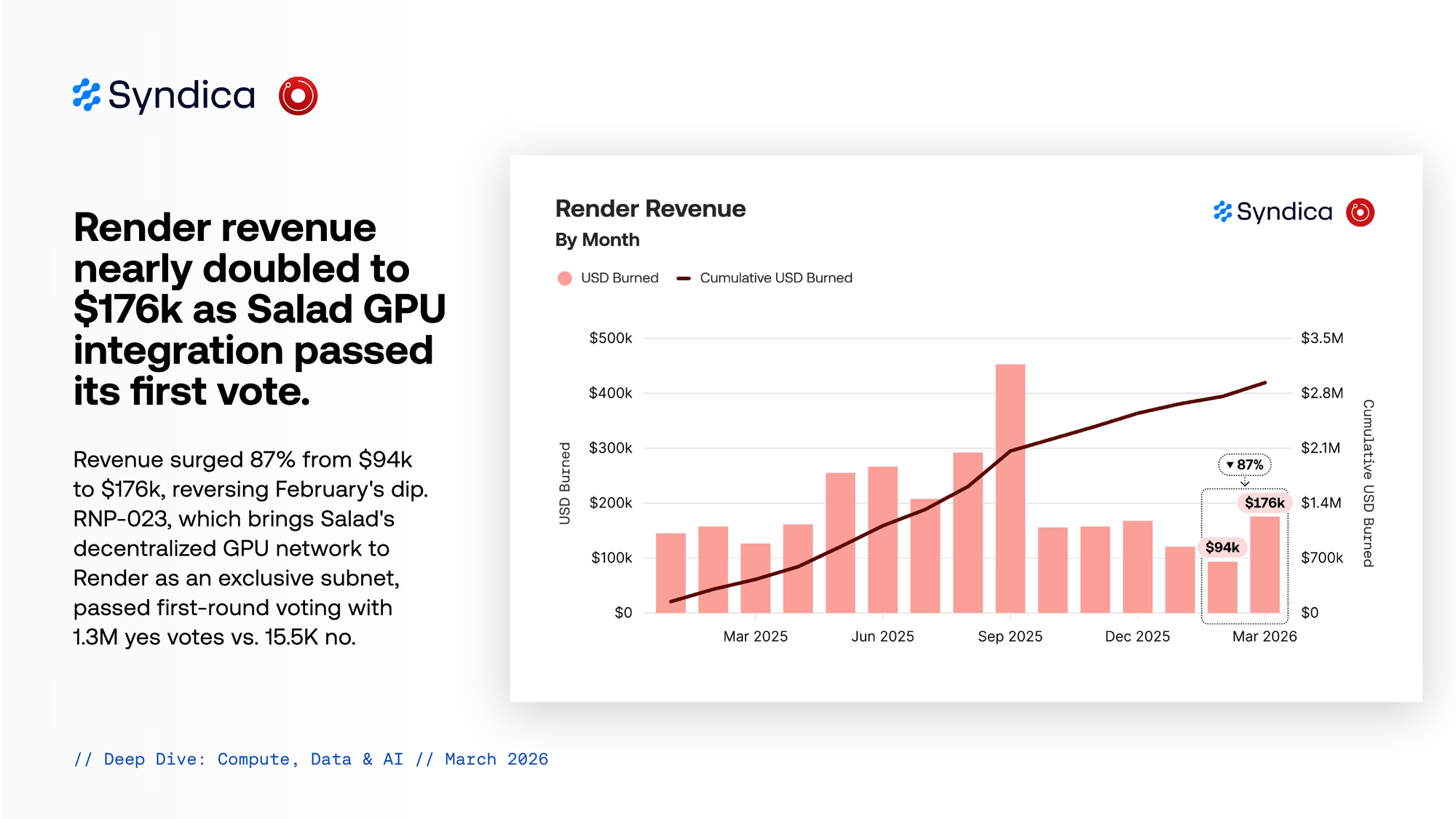
Render revenue nearly doubled to $176k as Salad GPU integration passed its first vote.
Revenue surged 87% from $94k to $176k, reversing February's dip. RNP-023, which brings Salad's decentralized GPU network to Render as an exclusive subnet, passed first-round voting with 1.3M yes votes vs. 15.5K no.
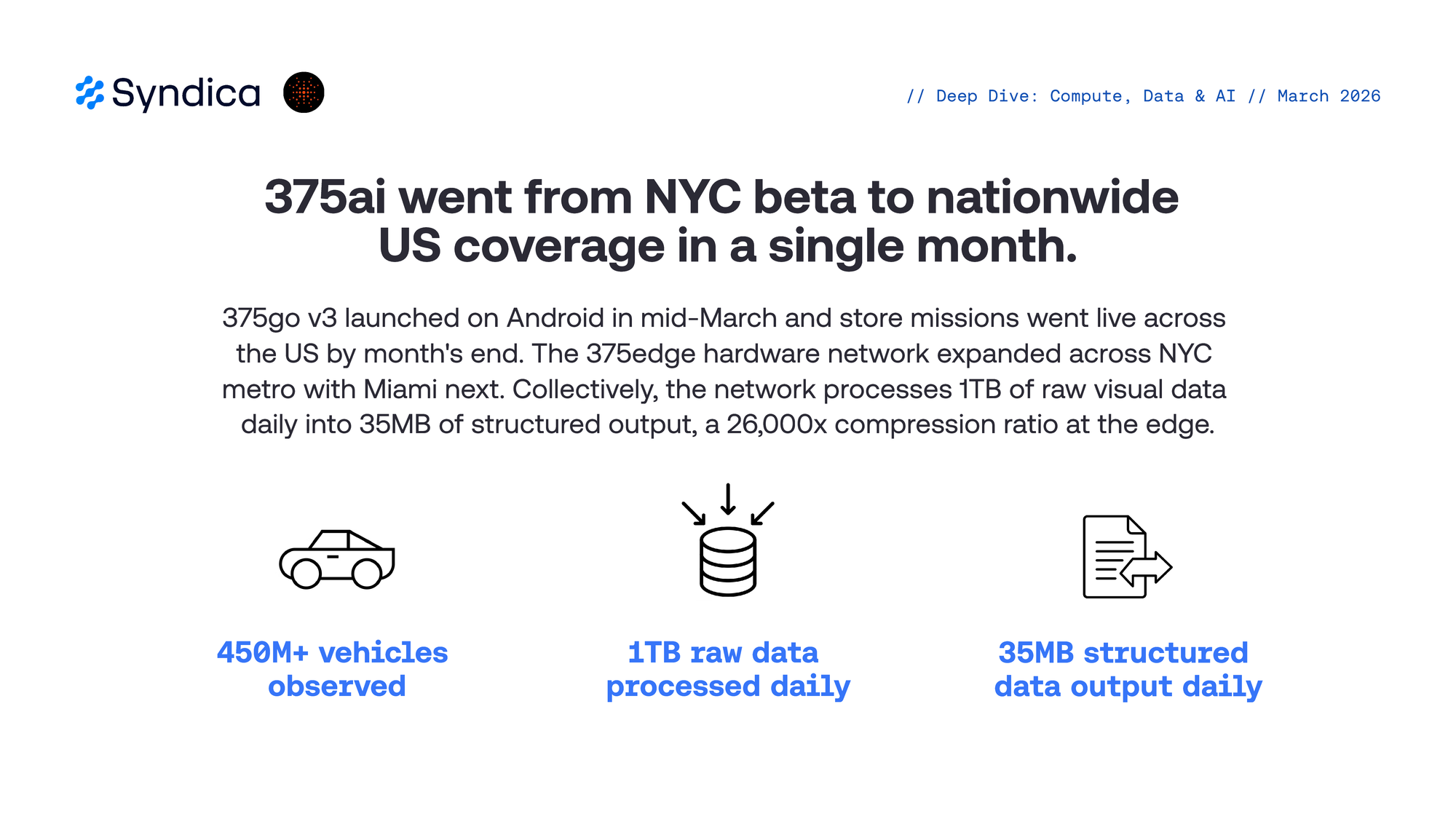
375ai went from NYC beta to nationwide US coverage in a single month.
375go v3 launched on Android in mid-March and store missions went live across the US by month's end. The 375edge hardware network expanded across NYC metro with Miami next. Collectively, the network processes 1TB of raw visual data daily into 35MB of structured output, a 26,000x compression ratio at the edge.